Sunday, March 17, 2013

Meteor Explosion In Russia

The remote Russian city of Chelyabinsk was rocked by massive meteor (see Editor's note 1) explosion on 15 February 2013 when a 10-tonne meteorite streaked over the city. Scientists from the National Aeronautics and Space Administration (NASA) estimated the force of the blast that occurred upon entering the Earth's atmosphere was about 30 Hiroshima bombs. Fortunately, there was no major damage as it occurred high in the atmosphere.


Residents of Chelyabinsk said they witnessed an extremely bright burning object in the sky. Video footage of the meteor explosion showed a fireball streaking across the sky followed by a very loud sonic boom shortly after. NASA confirmed that the object was actually brighter than the sun.

As the asteroid comes in contact with the atmosphere and it converts all the energy and creates a shockwave. Some people reported that the air in Chelyabinsk smelled like gunpowder after the explosion. The blast damaged about 4,000 buildings with pieces of shattered broken glass littered throughout the city. More than 1,200 people suffered minor injuries due to the broken glass while a few was sent to hospital for further examination. Officials have pledged to replace all the broken windows within one week. As the people of Chelyabinsk try to return to their normal lives, works have started to replace broken windows with new ones throughout the city with drilling works starting early in the morning.
  

Local authorities have deployed about 24,000 troops to help in the relief effort. They have also identified three potential impact sites where the meteorite could have landed. Two sites are located near Lake Cherbakul while the third is located farther northwest near the town of Zlatoust. One fragment of the meteorite was believed to have landed in the frozen lake as local fishermen found a large crater which might possibly be the result of the impact. The crater has a diameter of 6 meters. A team of six Russian divers searched the lake for fragments of the meteor however; they were not able to find anything.

Three days later on 18 February, scientists claimed they have found fragments of the meteor near Lake Cherbakul. A team of Russian scientists conducted tests on rocks that seemed unusual and confirmed that it has similar composition with a meteor. The fragments were made up of metallic iron, chrysolite and sulfite.

After confirmed news of meteor fragments found near the lake, it sparked a worldwide interest for these fragments. Russian space debris hunters are selling so-called ‘genuine’ pieces of the space rock as much as US$10,000 per piece on their websites. Local authorities have responded by cordoning off the area around the lake and prevent any media or space debris hunters near the lake. This is to ensure smoothness of the investigation by Russian authorities and scientists. Thus, deter space debris hunters from having the opportunity to sell the fragments to buyers in the black market for quick and easy money.

Editor's note 1: The terms asteroid, meteor and meteorite often get misused. Here are the correct definitions of those terms.

An asteroid is a rocky object in space that's smaller than a planet and is loosely known as space debris or leftover fragments from the formation of the solar system. There are millions of asteroids orbiting the sun. Some can be as large as hundreds of kilometres wide such as asteroid Ceres which is 940 wide. Asteroids have no atmosphere but many are large enough to exert a gravitational pull.


A meteor is an asteroid or other object that burns and vaporises upon entry into the Earth's atmosphere, like the one that was seen over Russia. Meteors are commonly known as shooting stars.


If a meteor survives the plunge through the atmosphere and lands on the surface, it is known as a meteorite. Meteorites are usually categorised as iron or stony. As the name implies, iron meteorites (see top picture below) are composed of about 90% iron while stony meteorites (see bottom picture below) are made up of oxygen, iron, silicon, magnesium and other elements.


Editor's note 2: An asteroid half the size of a football field also buzzed past Earth on 15 February, the same day as a meteor hit Russia. At its closest approach at 2:24 p.m. EST (1924 GMT), the 45-metre asteroid 2012 DA14 cruised within 27,000 kilometres of Earth. The encounter marked the closest fly-by by such a big asteroid that's ever been known about in advance.

Total Defence Day 2013 - United We Stand

On 14 February 2013, ITE College east celebrated total defence day at the atrium. There were many exhibit boards regarding about total defence that were placed in the middle of the atrium. Students and teachers were free to view the exhibits to understand more about total defence that day. The boards gave information about what are total defence and the five aspects of total defence which is Psychological Defence, Social Defence, Economic Defence, Civil Defence, and Military Defence.

The commemoration also showcased a flash-mob, exhibits and videos made by the students, a demo of the Virtual Commando program as well as a sign-up booth for the National Education Gaming Competition. Needless to say, the flash mob was a great success.


Total Defence was first formed in 1984 to highlight that it plays a part in every Singaporean’s life we must be united to defend and protect our country from all forms of attack be it military or non-military and to maintain peace.

Psychological Defence is about everyone’s commitment to the country for a better future and to progress and prosper as a united nation.

Economic defence is where the government, business organise themselves in a way that our economy will not break down in war or under the threat of war in the future.

Military Defence is regarding about the SAF Singapore Air Force and the Singapore military. It is essential to build a strong Military Defence in Singapore like having guys go through national service so that we will be prepared when disasters occur.

Civil Defence is safety and basic needs of the whole community so that life may go on as normally as possible during emergencies.

Social Defence is about the different races and religion living together in harmony and spending time on the interests of the nation and community.


Total Defence in Singapore is a preparatory strategy based on the understanding that besides military action, a country can be weakened in other ways such as:

(a)   Wrecking its economic systems,

(b)   Tearing apart its social fabric,

(c)   Targeting the nation’s beliefs and commitment to defence, and

(d)   The inability to recover from disasters, both natural and man-made.

After the event, a impromptu survey was done amongst the spectators. When asked what Total Defence meant to some staff and students, their responses had been nothing but positive.

Total defence means defending our country and be thankful that we feel save here as the arm forces are doing a great job ~ Monica and Farhana 


Total defence reminds us all to view Singapore as their home, remembering the fear during all the turbulence times and how we have come so far since then. Also, makes us think how we can contribute to Singapore so that it continues to be this peaceful way ~ Hafiz, PI1204K

Tuesday, February 26, 2013

Viewpoint - Let's Celebrate The End of CNY with a Chingay Bang

Recalling back when I was an audience in the Chingay Parade 2013, it was a memorable experience that I will be happy to share. Basically, the event I attended was at 23rd of February and it took place at the Formula One (F1) Marina Bay Street Circuit route. About Chingay, its name was created from its Hokkien dialect that defines “art of costume and masquerade” that celebrates the strength of the human spirit in the face of life’s challenges. It is like an annual street parade that will be held in Malaysia and Singapore in celebration with the birthdays of the Chinese deities or the procession of the Goddess of Mercy as part of traditional Chinese New Year. For every year, there will be a suitable theme for the parade. This year, it is themed ‘Fire in Snow’. It presents fire as a symbol of resilience, bravery, perseverance, passion and determination. Also, snow symbolises challenges and hardships so to overcome the fire’s lights of hope.


My siblings and I settled down at 7:30pm with our snacks and drinks we bought in Raffles City. I observed that majority of the audiences in different race has get on their spot as well. Soon after, the parade starts at 8pm with the emcees’ introduction and brief explanation about Chingay and its history followed by the arrival of VIPs including Singapore’s current president, Mr Tony Tan with his wife, Mdm Mary Chee. Next, the emcees tried testing the crowd with what we called the ‘Kallang Wave’. “Whoa!” I can literally see the wave flowing from one end of the sector to the other end in seconds. Personally, I think that it is an appropriate thing to test the crowd as you will see the obvious impact. Next, the atmosphere was starting to get overwhelmed as 1,000 burning used woks and pots started to light-up the entire lane without the spotlights on. Later, large groups of performers in their specific cultural costumes started to invade the F1 pit lane with excitement. The audiences were holding onto their ‘Pom Poms’ and blowing their given whistles to welcome the performers. The motivators were like cheering the audiences on and ‘screaming their lungs out’. The cheer begins like “Chingay, Chingay, we are one! People, people, we are one! Parade, parade, we are one! Singapore, Singapore, we are one!” It keeps all of our excitement pumped up.


I observed that the performers are from different respective organisation and association. Just one organisation, we can assume that there will be a handful of performers. Under different organisation, we will see many cultural costume designs and dance steps. In fact, the six-part segment will involve approximately 10,000 performers from 120 organisations. When the performers from different organisations were all dancing and grooving along to the harmonious songs, it was absolutely colourful. That is the unique thing of the parade! The colours, designs, decorations and costumes totally mesmerized us. In addition, there was decorative moving ‘hua che’. It is mainly a moving car in different shapes that has LED lights wrapped around it. Also, the ‘hua che’ is big enough to occupy a small group of people onto it while it’s moving along the F1 pit lane. The spectacular skyline with the Singapore Flyer can’t stop the audiences from snapping pictures of it in conjunction to the parade. Many of us were tuning in to the songs with the performances; it’s more than just a parade. It’s more like witnessing a combination of party, skit and parade.


At the end of the parade, we witness SNOW as the theme for 2013 is ‘Fire in Snow’. It was an extraordinary sight as the past few years; the theme does not have any snow in the parade. It will be one of the unusual scenery experienced on that day in Singapore. That will be a wonderful way to end the Chingay Parade 2013. All of us perspired even though we didn’t really get active during the parade. It must be the adrenaline in us that helps to regulate our heart beat rate that caused us to perspire but we enjoyed it throughout. In this event, people like the student volunteers, motivators, light and sound in-charge, emcees and the audiences came together as one and played a part to make this event a successful one.


For your information, Chingay Parade 2013 celebrates its 41st anniversary this year as it first started out during the year 1973. Ultimately, I sensed high positive energy around and it’s a good way to welcome the Year of Snake. In conclusion, it’s a gain to attend this extravaganza as its Asia's largest annual street procession of floats. Therefore, it will be highly recommended to people that appreciates multicultural traditional performance.
CCA Fair 2013

Tension was building in the air at 9am on the 15th of January 2013 at ITE College East (Simei)’s indoor sports hall. It was the day of the campus’s annual CCA fair. The large room was packed with people. Students and staff alike were keeping themselves occupied, reaching upwards to stick laminated sheets of coloured paper advertising their club’s activities and achievements. Some were down on their knees, fiddling with the main sockets in which they were to plug their electronic gadgets into. The rest were busy with decorations. 

The event was to officially begin at 10 o’clock sharp. However, students started streaming in earlier. Guests were guests. They had to be served. Looking fresh-faced and alert, many freshmen strode in cautiously. Amongst them were second year students, and they carried with them the intention of either looking for their duty-bound friend at an assigned booth or finding a new CCA. All in all, they were soon greeted with smiles at the entrance.


Groups of students representing a variety of CCAs had gathered at the entrance, hoping to snag a few new recruits for their own. Sure enough, several bewildered students were later brought away to a certain destination. Others however, soon learnt the art of dodging an unwanted welcoming committee. They hightailed their way out. Once out of earshot, many might let out a relieved sigh, only to be greeted with more smiles and persuasion from those tending to the booths. Resigned, that would be when most ended up succumbing to the calls from members of a certain club. The cycle repeated itself. 

By about noon, the energy level in the indoor sports hall had dropped considerably. In addition, some club members started bringing in packets of food and drinks for everyone. Others started leaving the room to grab a bite. After all, it was break time. Everyone was tired and wanted to rest. Shifts were made, and the event continued. Various clubs gathered more interested members and offered them tryouts.

There were interests of all sorts- the arts, community service, entrepreneurship, sports, technology and innovation, and of course the leadership clubs. Art clubs nurture the artist in an individual through participation in diverse clubs and activities. With that said, taking part in various workshops offered will also increase one’s appreciation and showcase talents. Community service allows one to take a step back from his busy schedule and play a part in making the world a better place by helping those who are less fortunate.

On the other hand, entrepreneurship clubs allows a person to explore new market trends, take calculated risks and manage a business venture. What better way is there to learn some useful skills? Sports clubs all provide us with a good deal of exercising, keeping our bodies fit and healthy and always in the best state of mind whether for work or play. Technology clubs let their members get innovative and hone their skills. Lastly, leadership clubs bring off one’s confidence through comprehensive workshops, camps and other training programmes.


 All’s well that ends well. At the end of the day, everyone was equally exhausted and proud of playing a part in this event. While carrying out their roles, many also found themselves making new friends who shared similar interests. What a day.

Tuesday, October 30, 2012

Do You Know...Your Earth - Part 1?

Do you know that the Earth is more than 4.5 billion years old?


Editor's note: Of all known forms of animals life ever to inhabit the Earth, only about 10 percent still exist today.

Do you know that the Amazon rainforest produces more than 20% the world's oxygen supply?


Editor's note: The oxygen produced by the Amazon rainforest contributes to the oxygen in the atmosphere that makes up 21% of the air.

Do you know that there are more than 50,000 earthquakes throughout the world every year?


Editor's note: An earthquake in 1811 caused parts of the Mississippi River to flow backwards.


Do you know that the Sun contains 99.8% of the total mass of the solar system?


Editor's note: All the coal, oil, gas, and wood on Earth would only keep the Sun burning for a few days.

Do you know that approximately 70% of the Earth is covered with water?


Editor's note: The Pacific Ocean covers 28% of the Earth's surface. Also, the Atlantic Ocean is saltier than the Pacific Ocean.

Do you know that the world's highest capital is La Paz, which is the capital of Bolivia? The city is situated at about 3,650 m above sea-level and it is built on steep hills.


Editor's note: Finland is also known as "the land of of the thousand lakes". There are 187,888 lakes in total. While most of these lakes are considered small, there are 309 of them that are larger than 10 km².


Do you know that of the twenty-five highest mountains on Earth, nineteen are in the Himalayas?


Editor's note: The deepest point on the Earth's surface is in the Pacific Ocean located in the Mariana Trench.


Editor's note: Compare the depth of the Mariana Trench with Mount Everest, the highest mountain in the Himalayas.

Do You Know...Your H2O?

Do you know that in a 100-year period, a water molecule spends 98 years in the ocean, 20 months as ice, about 2 weeks in lakes and rivers, and less than a week in the atmosphere?


Editor's note: The overall amount of water on the planet has remained the same for two billion years. Therefore, it is possible that the water that comes from the faucet can contain the molecules that Neanderthals drank.

Do you know that 80% of the earth's water is surface water?


Editor's note: The other 20% is either underground water or atmospheric water vapour.

Do you know that of all the water on earth, only 2.5% is fresh water?


Editor's note: Fresh water exists mostly as ice, a sizeable amount as groundwater and a small amount as readily accessible water in lakes, streams and rivers (see diagram above).

Do you know that approximately 66% of the human body consists of water, which amounts to about 37 litres?


Editor's note: Water exists within all our organs and it is transported throughout our body to assist physical functions. For the compositions of water in our body, see the diagram above.

Animals, like humans, also consist of mostly water which assist in their physical functions.
     (a)     75% of a chicken is water.
     (b)     80% of a pineapple is water.
     (c)     95% of a tomato is water.
     (d)     70% of an elephant is water.

Wednesday, October 24, 2012

Do You Know...Your Body?

Do you know how much skin is shed at any one time? It's 600,000 particles! 


Editor's note: Averaging that out for over a year, it works out to be about 900 g of skin. So, a person will loose around 65 kg of skin by age 70.

Do you know why you produce earwax?


Editor's note: It protects the delicate inner ear from bacteria, fungus, dirt and even insects. It also cleans and lubricates the ear canal. By the way, the ears will secrete more earwax when you are afraid.

Do you know that you have fewer bones than a baby?

Editor's note: Try counting the two hand bones shown above. How many bone does a child's hand (left) and an adult's hand (right) have? Do you manage to count 23 and 13 bones respectively?


As babies, humans have about 350 bones. However, some bones fuse together during growth and thus ends up with only 206 as adults. 

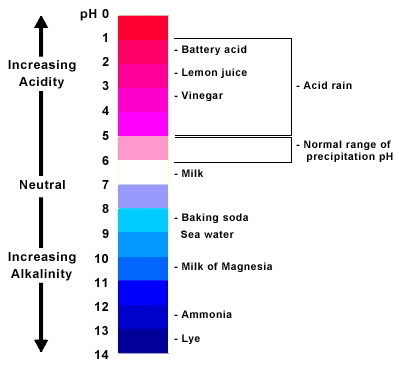
Do you know that the acid produced by the stomach to help digest the food you eat has a pH value between pH 0.8 and pH 1.0?


Editor's note: The stomach acid is primarily hydrochloric acid and at this pH value, it is much stronger than the ones found at the lab. At that pH, the stomach acid is as strong as battery acid such that it can even dissolve a stainless steel razor blade.


Do you know that the length of the small intestines is 4 times as long as the person’s height? This means that if a person is 154 cm, the small intestines will be 616 cm!

  
Editor's note: If the small intestines are not looped back and forth upon itself, they will not fit into the abdominal cavity.